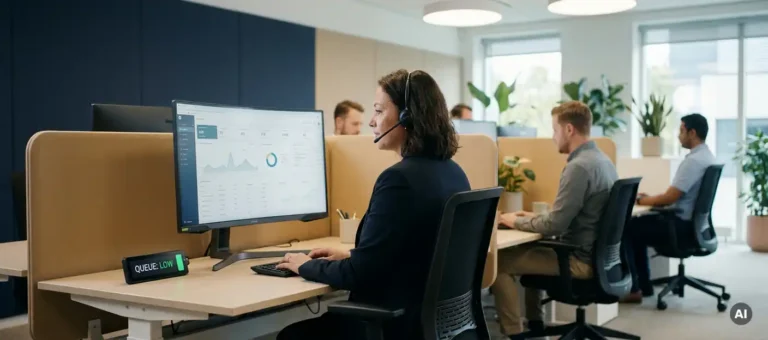
The difference between traditional telephony and omnichannel lies in the way communication channels are managed. Traditional telephony works with separate systems for each channel, while omnichannel integrates all communications – phone, email, chat, WhatsApp – into one platform. This ensures seamless customer interactions where conversations can switch between channels without losing information. Modern companies are increasingly choosing omnichannel because it offers better customer experiences and reduces operational costs.
What exactly does traditional telephony entail?
Traditional telephony works with separate systems where each communication channel has its own platform. Your phone system, email system and any chat solutions function separately from each other, meaning customer information is not automatically shared between channels.
These systems are often built on legacy technology such as Avaya and Mitel. Many Dutch companies are still stuck with these platforms because they have invested years in hardware and training. The problem is that these systems are not designed for the modern way of communicating.
The biggest challenge is in the technical debt that grows every year. Legacy systems require expensive maintenance contracts, have limited integration capabilities and cannot scale with changing business needs. For hybrid working, they are often unsuitable because they cannot seamlessly integrate fixed and mobile.
Operationally, this means your employees have to switch between different applications to help customers. A phone call transferred to email requires manual transfer of information, which takes time and causes errors.
How does omnichannel communication actually work?
Omnichannel communication integrates all contact channels into one unified platform. Telephony, email, WhatsApp, live chat, social media and SMS are managed from the same interface, making all customer interactions a cohesive whole.
The system works with a central database that stores all customer information. When a customer calls after a previous email, your employee immediately sees the full call history. This applies across all channels – a WhatsApp conversation can seamlessly transition to a phone call without losing context.
Modern omnichannel platforms use AI technology for intelligent routing. The system automatically analyzes demand type, customer value and employee availability to route calls to the right person. This is done in real time and across all channels.
The technical foundation is cloud-based infrastructure that handles all communication flows. Instead of separate systems, you have one platform that is scalable and receives automatic updates. For employees, this means one interface in which they can handle all customer contacts, regardless of the channel the query comes in.
Why are companies making the switch from traditional to omnichannel telephony?
Companies are making the switch because traditional systems no longer meet modern customer and employee expectations. Customers expect to be able to continue their conversation across channels without having to retell their story.
The main driver is cost savings. Legacy systems such as Avaya and Mitel require expensive maintenance contracts, specialized technicians and regular hardware upgrades. Omnichannel platforms are cloud-based, meaning you don’t have to maintain your own hardware and get automatic updates.
Hybrid working has added urgency. Traditional systems have difficulty integrating fixed-mobile, making employees less accessible at home. Omnichannel solutions offer one number and one voicemail, regardless of where your employees work.
For different business types, the switch offers specific benefits. Housing associations can better track resident requests across all channels. Educational institutions can offer parents and students consistent service through their preferred channel. Utilities can handle outage calls more efficiently through automatic routing based on urgency.
Preventing further technical debt also plays a major role. Waiting every month longer means higher migration costs and more missed opportunities for efficiency improvements.
What concrete benefits does omnichannel offer over traditional systems?
Omnichannel systems offer increased reachability, better cost efficiency and superior scalability compared to traditional telephony. Customers can reach you through their preferred channel while you manage all interactions from one platform with complete call history.
**Functionality:** Traditional systems limit you to telephony with possibly email as a separate channel. Omnichannel platforms support 30+ digital channels integrated into one interface. Your employees can answer WhatsApp messages, make phone calls and handle emails without switching between systems.
**Costs:** Legacy systems require hardware investments, maintenance contracts and specialized IT support. Cloud-based omnichannel works with predictable monthly costs with no hardware investments. You save on maintenance contracts and can flexibly scale up or down.
**Flexibility:** Traditional systems are difficult to adapt to changing needs. Adding new channels often requires separate implementations. Omnichannel platforms can easily integrate new communication channels because they work with a single unified architecture.
**AI integration:** Modern platforms offer intelligent call routing that automatically directs calls to the right employee based on expertise, availability and customer history. Sentiment analysis helps identify urgent cases, while chatbots can handle simple queries.
**User experience:** Customers do not have to repeat their story at channel change. Employees immediately see all relevant customer information and can provide more targeted assistance. This leads to shorter call times and higher customer satisfaction.
For organizations ready for modern communications, we offer omnichannel business telephony that combines all the benefits in one integrated platform. We help you with the complete transition – from legacy systems to future-proof communication under one roof.
Frequently Asked Questions
Hoe lang duurt de overstap van traditionele telefonie naar omnichannel gemiddeld?
De implementatietijd varieert van 2-8 weken afhankelijk van de complexiteit van je huidige systeem en het aantal medewerkers. Een standaard omnichannel platform kan binnen 2 weken operationeel zijn, terwijl complexe migraties van legacy systemen zoals Avaya tot 8 weken kunnen duren. De meeste bedrijven zijn binnen 4 weken volledig overgestapt en operationeel.
Wat gebeurt er met mijn huidige telefoonnummers bij de overstap?
Je behoudt alle bestaande telefoonnummers tijdens de migratie naar omnichannel. Het proces heet ‘number porting’ en zorgt ervoor dat klanten je op dezelfde nummers kunnen blijven bereiken. De overstap gebeurt naadloos zonder downtime, zodat je geen gesprekken mist tijdens de implementatie.
Kunnen medewerkers het omnichannel systeem gebruiken zonder uitgebreide training?
Moderne omnichannel platforms zijn ontworpen voor gebruiksgemak en vereisen minimale training. De meeste medewerkers kunnen binnen enkele uren productief werken met de nieuwe interface. Het systeem integreert alle communicatiekanalen in één overzichtelijk dashboard, wat eigenlijk eenvoudiger is dan jongleren tussen verschillende traditionele systemen.
Hoe zit het met de beveiliging van klantgegevens in een omnichannel systeem?
Omnichannel platforms bieden vaak betere beveiliging dan traditionele systemen omdat ze gebruikmaken van moderne cloud-infrastructuur met enterprise-grade encryptie. Alle communicatie wordt versleuteld opgeslagen en gelogd voor compliance doeleinden. Veel platforms zijn gecertificeerd volgens ISO 27001 en GDPR-compliant, wat beter is dan de beveiliging van verouderde on-premise systemen.
Wat zijn de grootste valkuilen bij het implementeren van omnichannel communicatie?
De grootste valkuil is het onderschatten van de impact op interne processen en werkstromen. Zorg voor duidelijke communicatie naar alle betrokkenen en plan voldoende tijd in voor het aanpassen van procedures. Een andere veelgemaakte fout is het niet goed in kaart brengen van alle huidige integraties, wat kan leiden tot onverwachte complicaties tijdens de migratie.
Kan ik omnichannel communicatie geleidelijk invoeren of moet alles tegelijk?
Je kunt omnichannel gefaseerd implementeren door te beginnen met de belangrijkste kanalen zoals telefonie en email, en later andere kanalen zoals WhatsApp en chat toe te voegen. Deze aanpak vermindert risico’s en geeft medewerkers tijd om te wennen aan het nieuwe systeem. Veel bedrijven starten met een pilotgroep voordat ze organisatiebreed uitrollen.
Hoe meet ik het succes van mijn omnichannel implementatie?
Meet belangrijke KPI’s zoals gemiddelde afhandeltijd per gesprek, first-call-resolution rate, klanttevredenheidsscores en het aantal kanalwisselingen per klantinteractie. Ook operationele metrics zoals kostenbesparing op IT-onderhoud en verhoogde medewerkerproductiviteit geven inzicht in het succes. De meeste omnichannel platforms bieden uitgebreide analytics om deze metrics automatisch bij te houden.