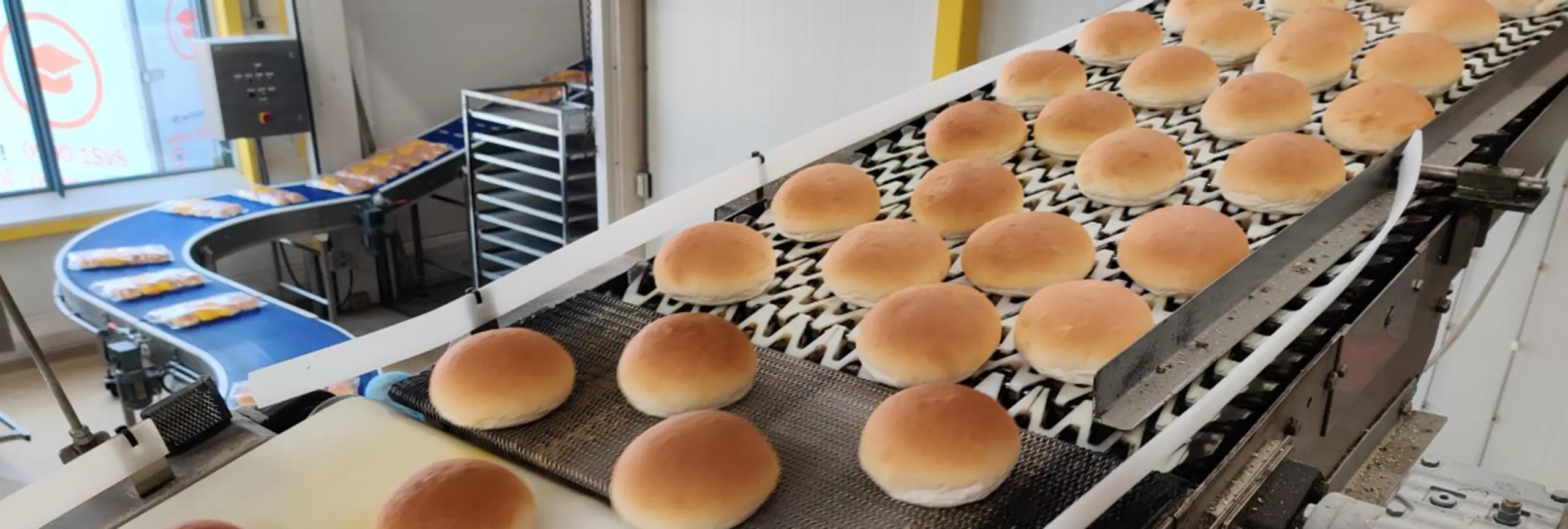
With Pegamento’s Computer Vision solution, bakery Amstelveld could be quickly optimized.

Quality improves with computer vision

Challenge

Result

AI strengthens the craft of baking

Amstelveld Bakery is a bakery specializing in small bread products, producing soft small bread items for the hospitality industry, foodservice wholesalers, and large-scale consumers. At the bakery, the quality of the final product is always the top priority. By using computer vision for bread quality control, Amstelveld has achieved better product quality, greater efficiency in production and logistics, and strategic insights for potential process redesign, demonstrating how traditional craftsmanship and smart technology can reinforce each other. In the bakery, everything revolves around consistent quality, speed, and reliability. Thousands of rolls roll off the assembly line every hour, with production reaching up to 200,000 rolls per day during peak periods.

To accommodate that scale, much of the production process is automated. Mixing, kneading, rising, baking, processing and packaging are largely done by machine. Yet the baking trade remains the basis. The automation mainly takes repetitive and physically demanding work out of the hands of employees, so that they can focus on overview, quality and keeping the process running smoothly.

An important part of this is the use of AI. On the production line, a smart system checks whether buns are accidentally stuck together. Such “double” buns can cause problems further down the packing line. The AI solution recognizes these anomalies at high speed and automatically removes them from the line. In doing so, technology helps prevent disruptions, monitor quality and improve production continuity.

The case of Amstelveld Bakery shows that AI is not only relevant for digital processes or office environments. Artificial intelligence can also add immediate value in a craft production environment. Not by replacing craftsmanship, but by making the work smarter, more reliable and efficient.  

The tastiest sandwiches by computer vision

When producing bread, it is important to check whether its quality is good enough before sending it to customers. Ideally, there should already be insight into the quality during the production process, so that rejected products are not packed unnecessarily. At Amstelveld this process was mostly done manually, but with the help of artificial intelligence it can now be done automatically. For Bakkerij Amstelveld, we developed a system with a normal camera in which it uses various AI networks to automatically check the bread and reject it if necessary. A first AI network looks at what type of bread is involved and makes sure that each individual roll is detected. Next, a second AI network goes to see if the quality is satisfactory. The system then actively rejects bread by controlling various reject bands via a Programmable Logic Controller (PLC).

Article in Quest magazine

The monthly magazine Quest published an article about our services to Amstelveld Bakery in April 2026. In the article Craft intelligence nicely shows how AI directly adds value even in traditional sectors. For example, technology helps to monitor quality, prevent disruptions and relieve employees. That’s exactly what we believe in: AI that doesn’t replace craftsmanship, but enhances it. You can read the article here with permission from Quest.

Here’s another interesting article on Quest about the use of AI in manufacturing environments.

"We never imagined that AI could even add to our work as bakers. We are happy with this cooperation with Pegamento and the quality that the system guarantees 24 hours a day."

Applied Solution

Applied expertise

WorkplaceX concept

With WorkplaceX, we make business processes smarter and more efficient by making the most of existing solutions.

WorkplaceX, the automated workstation
Valk reference Pegamento
Nintendo Reference Glue
KVK-Sprinklr Reference
Rijkswaterstaat computer vision application

Download the white paper here

Deepen your knowledge with Pegamento’s white papers.