Suicide prevention is an urgent social issue that touches thousands of lives every year. In the Netherlands, 113 Suicide Prevention plays a crucial role in providing low-threshold help via telephone and chat services. The recent integration of artificial intelligence (AI) within this helpline has yielded promising opportunities. AI can be used to support social workers in analyzing calls, improving interventions and optimizing services. But how effective is this technology and what ethical considerations come into play?
Salim Salmi, data specialist & researcher at 113 Suicide Prevention, specialized in the application of AI within 113 Suicide Prevention. During his doctoral research, he focused on using AI to analyze and improve interactions within the helpline. On Feb. 28, 2025, he gave a presentation at Pegamento during an internal meeting, explaining the results of his research and the implementation of AI within 113. His insights paint a unique picture of how AI can contribute to supporting caregivers and improving crisis interventions.
Insights from the presentation at Pegamento
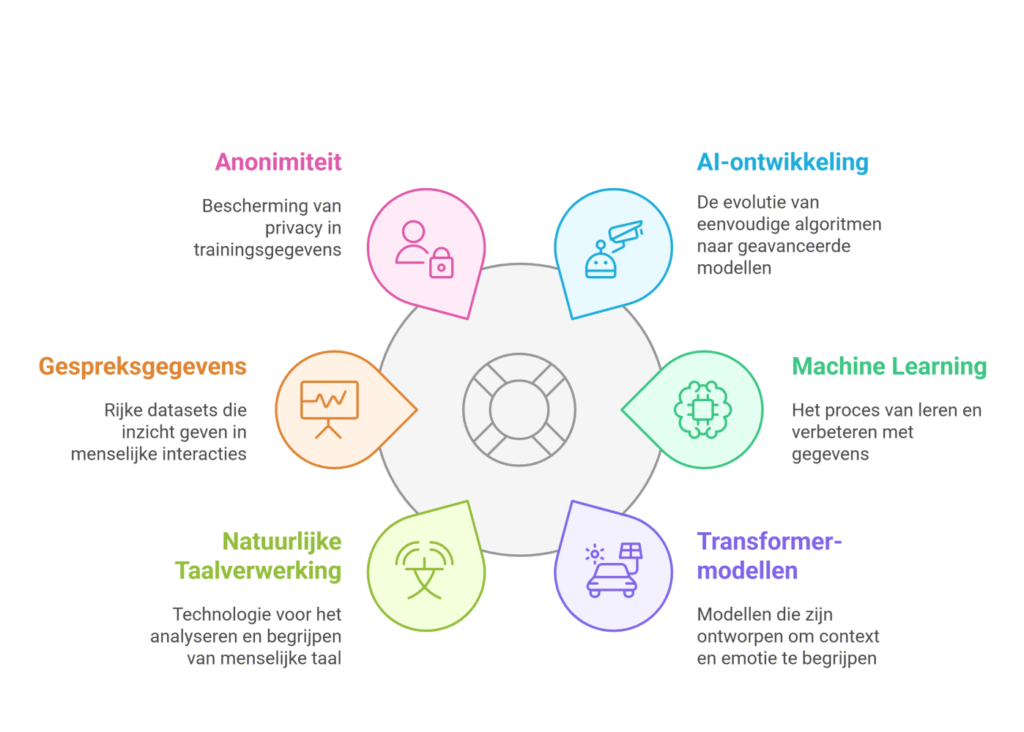
Salim Salmi’s presentation at Pegamento delved deeper into the practical applications and challenges of AI within 113 Suicide Prevention. Salmi discussed how AI systems were initially developed with simple search algorithms, but soon expanded to include machine learning and deep text analytics to better understand the nuance of conversations.
A major theme of the presentation was the complexity of call data. Salmi explained that standard algorithms are insufficient to fully capture the emotional charge of conversations. AI must not only analyze words, but also understand the context and intent behind statements. For this purpose, a transformer model was implemented, based on the GPT architecture, which is better able to understand the content and emotion of conversations.
Salmi emphasized that AI should play a supporting role and cannot replace human assistance at this time. Experiments with AI tools at 113 showed that social workers often valued AI solutions as an additional tool, especially in difficult conversations where a second opinion was desirable. Another point he made was that AI models had to be trained with call data from the helpline, while maintaining the anonymity of those seeking help. This presented the researchers with the challenge of building effective models without compromising privacy-sensitive information.
A specific AI support system was also demonstrated during the presentation. This system could make suggestions during live chat conversations based on previous conversations with similar help requests. Salmi indicated that social workers especially benefited from the structured insights AI offered, for example, about common conversation patterns and possible effective interventions. This helped not only in reducing response time, but also in increasing the effectiveness of the conversations.
In addition, the role of AI in conversation analysis was discussed. Using natural language processing (NLP), chat conversations were analyzed to identify themes and emotional tone. This helped to better assess which approach was most effective and which helping strategies worked in specific contexts.
Another aspect Salmi touched on was the implementation of AI in evaluating conversations. AI was used to identify trends in calls and analyze whether certain helping strategies were more successful than others. By combining feedback from both help seekers and social workers with AI analysis, 113 was able to improve the effectiveness of their approach.
Finally, Salmi discussed opportunities for future applications of AI within 113. A major focus was on extending it to phone calls. Although AI is currently used primarily in chat calls, speech recognition technology could be a next step. This could analyze emotional signals in phone calls to assess even more quickly whether a help-seeker is in acute crisis.
Additional insights from Salim Salmi’s dissertation
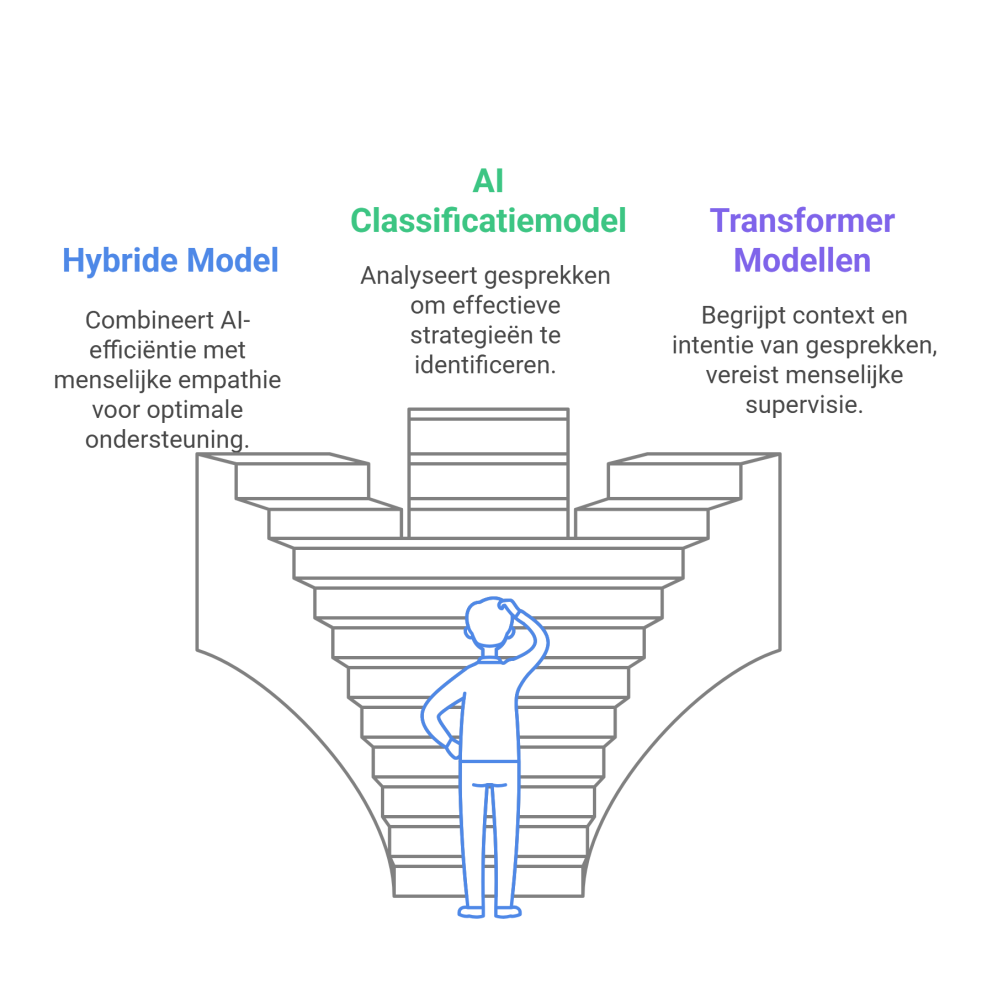
In addition to the insights from the presentation, Salmi’s dissertation offers further depth on the application of AI at 113 Suicide Prevention. One of the key points from his research was the need for a hybrid model in which AI and human social workers work together. AI can help identify patterns and make suggestions, but empathetic interaction remains a crucial component of effective counseling.
Another key point of the dissertation was the development of an AI-based classification model for analyzing the effectiveness of conversations. By using machine learning techniques, conversation fragments were analyzed and categorized based on their impact. This made it possible to identify which conversational strategies contributed to a positive change in the help-seeker’s state of mind.
The dissertation also discussed in detail the technical aspects of AI models. Among other things, Salmi examined how transformer models such as Chat GPT, Claude could be applied to the analysis of suicidal conversations. An important conclusion was that these models were good at understanding the context and intent of conversations, but human supervision remained necessary to correct misinterpretations.
Furthermore, Salmi discussed the ethical and privacy-related implications of AI within suicide prevention. He emphasized that AI models should be continually audited to minimize bias and inaccuracies. In addition, social workers should be trained on how to use AI tools effectively so that they can take full advantage of the technology without losing sight of the human side of the work.
Future prospects
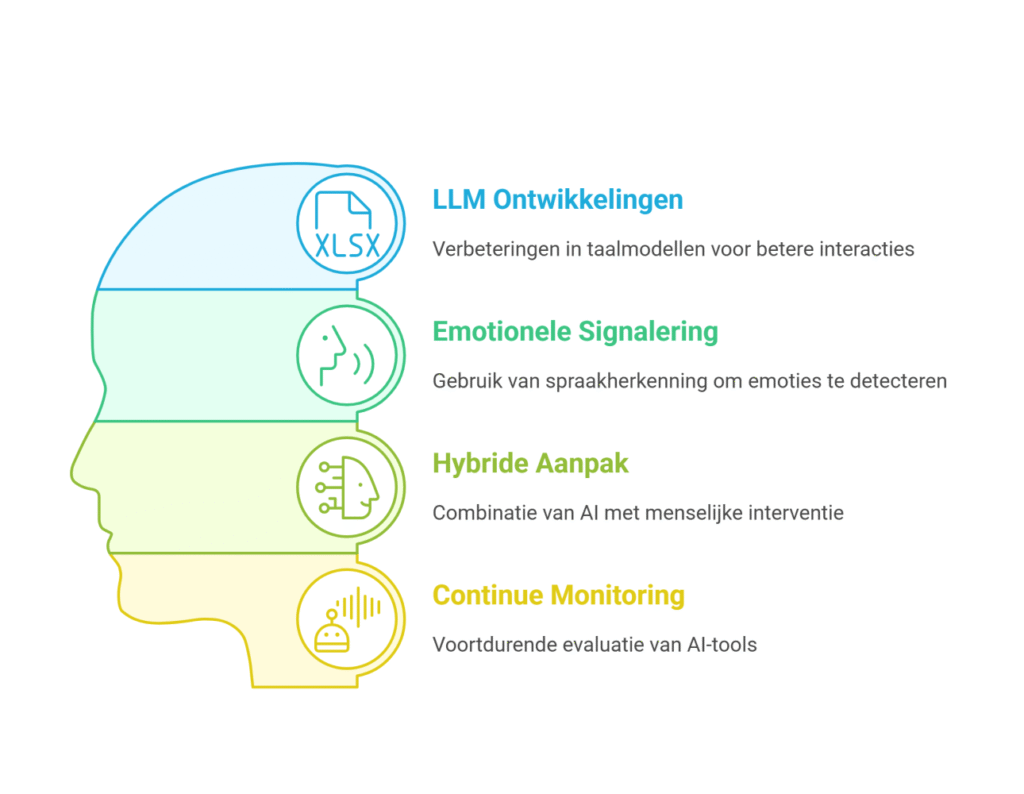
The future of AI within 113 Suicide Prevention is promising. New developments in Large Language Models (LLMs) can further refine the interaction between AI and social workers. One possible extension is the application of AI in telephone calls, where speech recognition helps identify emotional cues.
At the same time, a hybrid approach remains essential: AI should be used as a tool, not as a replacement for human responders. Through constant monitoring and adjustment, AI can make a valuable contribution to more effective and efficient emergency services.
Conclusion
AI is playing an increasing role within 113 Suicide Prevention, offering innovative opportunities to improve crisis intervention. Although the technology is still under development, initial results show that AI can contribute to faster and more effective counseling. At the same time, ethical and privacy-related challenges must be taken seriously. For now, collaboration between AI and human care providers seems to be the most promising route to improved suicide prevention in the Netherlands.