A good product is not enough anymore. You also need great (customer) service. And that service is not only realized by the customer service department itself, but actually goes through the entire organization: customer service, marketing, sales, finance and so on. Every contact moment makes or breaks your brand. That is why it is essential to have a fully integrated customer view of your customers. Nothing is more annoying for the customer if your employee has no idea what he is talking about. How annoying is it to have to explain your story all over again? You can prevent this with a 360-degree customer view. But how does it help your business grow into a success?
What is a 360-degree customer view?
First, let’s clarify what a 360-degree customer view really is. A 360-degree view of a customer consists of a collection of all customer data in one place. For example, this consists of contact information, sales, customer service interactions and you name it. Ultimately, it consists of all the different contact moments the customer interacts with your company. It is also called an integrated customer view.
Why is a customer view so important?
A good customer view is crucial to success in business. It enables companies to understand who their customers are, what their needs and wants are, and how best to serve them. With an integrated customer view, companies can tailor their marketing and sales strategies to meet their customers’ specific needs and increase customer satisfaction.
It also helps identify new opportunities for growth and develop innovative products and services that meet customer needs. For example, it would be crazy to be presented with a subscription when you are already a subscriber to it. But if we’re offered a subscription that’s right up our alley, and therefore piques our interest, we’re open to it. Or you are presented with a certain offer because you are a loyal customer and based on your interactions it appears that you are very interested in that particular product.
A good example is your phone subscription. You get a notice a few months in advance that you are about to renew or replace your subscription. You then often get offers that match your user behavior. For example, based on the number of call minutes or MBs you use each month.
In short, a good customer view is an essential part of business and can have a major impact on a company’s success.
4 ways how a 360-degree customer view grows your business
There are several ways that help a business grow based on a 360-degree customer view, below we list the 4 most important ones:
1. Really get to know the customer
When you know who your customers are, it helps you develop a better customer management strategy. Often we tend to make the last interaction with a customer decisive for how we view the customer, aka the phenomenon of recency bias. Here we give preference to recent events rather than what happened in the past. This can quickly lead to incorrect assumptions or even missed sales opportunities.
Anyway, customer relationships are not just about selling. Customer service is also a big part of the customer journey. When customer information is stored in different systems and then these systems do not work together, it is difficult to provide good customer service. In a 2018 survey by Forrester Research, 42% of service employees said they could not help customers efficiently enough due to a lack of accessible and complete customer information. It even found that “not being helped immediately” was the top reason for abandoning a transaction.
A CRM software is a great tool to ensure that you record and store all customer contact moments. A place where you collect, process and store all customer data in one environment without having to worry about where all customer information comes from. For example, such a system as our Pegamento Contact Center.
2. Better collaboration and cross-selling campaigns
Another great benefit of having a 360-degree customer view is that it improves collaboration between different departments, especially between marketing, sales and service.
For example, when a service ticket comes in with a sales opportunity, the service representative can see who the associated account manager is and notify him. In addition, prior to an appointment, the account manager can see if there have been any recent requests made by the customer. He can then include these in the conversation. In turn, the marketing department can use that same information to target more personalized campaigns to the customer.
Aberdeen Group research shows that by properly aligning marketing and sales:
- 32% higher revenue generation
- 36% more customer retention
- 38% higher profit rates achieved
In addition, as an organization, you provide uniform and consistent communication when departments can access the same information. This again saves a lot of confusion and customer irritation.
3. Making better predictions
A 360-degree customer view not only shows you what your customers have done before, but it also gives you insight into what they might do in the future. Think of a complete overview of all sales, phone calls, emails, service requests, priorities and preferences. You can use all the data stored in the system to make reliable analyses and better predictions about what he or she will need in the future. This allows you to better assess when there are opportunities for cross- and upselling. It also tells you if it is necessary to change your offerings.
In addition, artificial intelligence (AI) can also help make better predictions. It analyzes large amounts of data coming from various sources, such as customer data, transactional data and social media. KI can process and analyze this data to provide valuable insights into customer behavior, preferences and needs. Using these insights, you can provide personalized offers and improve customer satisfaction.
One example is our Mail Assistant, which uses KI to understand the intent of emails and uses smart templates to automatically handle emails. Another example is the Sprinklr Platform. If a service employee has a conversation with a customer in a different language, the text is instantly translated into the correct language during the chat, the intent of the conversation is immediately found out, and the employee is guided in responding to the customer by automatic response suggestions.
It is also possible to gain insight into whether customers are satisfied or dissatisfied. When a service employee is talking to a customer via chat or phone, the software recognizes the customer’s emotional state based on words, tone-of-voice and/or speech. Similarly, it recognizes whether people are talking positively or negatively about your organization via social media. These insights give additional substance to the customer view from which, in turn, you can make better predictions.
4. Personalize and benefit with a 360-degree customer view
It is now common knowledge that most customers prefer to do business with companies that use personal information to make the experience more relevant. This requires a complete picture of the customer’s interactions. This includes both online and offline interactions, such as purchases, customer service calls, website behavior and any other sources you gather information about the customer from. Combining this information gives you a better grasp of customer needs and interests. This allows you to develop targeted and personalized marketing and sales strategies.
In fact, from McKinsey’s Next 2021 in Personalization report, 71% of consumers expect a personalized experience. 90% of customers also spend more when they get that personalized service. Definitely something to think about when getting started with an integrated customer view.
You might also find this interesting to read:The 6 customer contact trends of 2023 within contact centers
From customer information to an integrated customer view
But how does it help your business grow into success? By gathering all of your customers’ information together, making it insightful in one place and giving different departments access to it, you create a 360-degree customer view that helps you grow your business to success. Ultimately, it provides:
- Improved customer service: companies can improve their customers’ experience by better understanding their needs and preferences. They can offer personalized experiences, such as recommendations based on previous purchases or offering special discounts on products customers buy frequently.
- More targeted marketing: it allows companies to tailor their marketing messages to specific customer segments and target them more effectively. This leads to higher conversion rates and better ROI for marketing campaigns.
- Better product development: By understanding customer needs and preferences, a company can develop products and services that better meet customer needs. This leads to higher sales and a better reputation in the marketplace.
- Increased customer satisfaction: Understanding customer needs and preferences leads to higher customer satisfaction and loyalty. This in turn leads to higher customer retention and positive word of mouth, which in turn helps attract new customers and grow the business.
How to get started. Integrating a CRM system where you can collect and capture all the information.
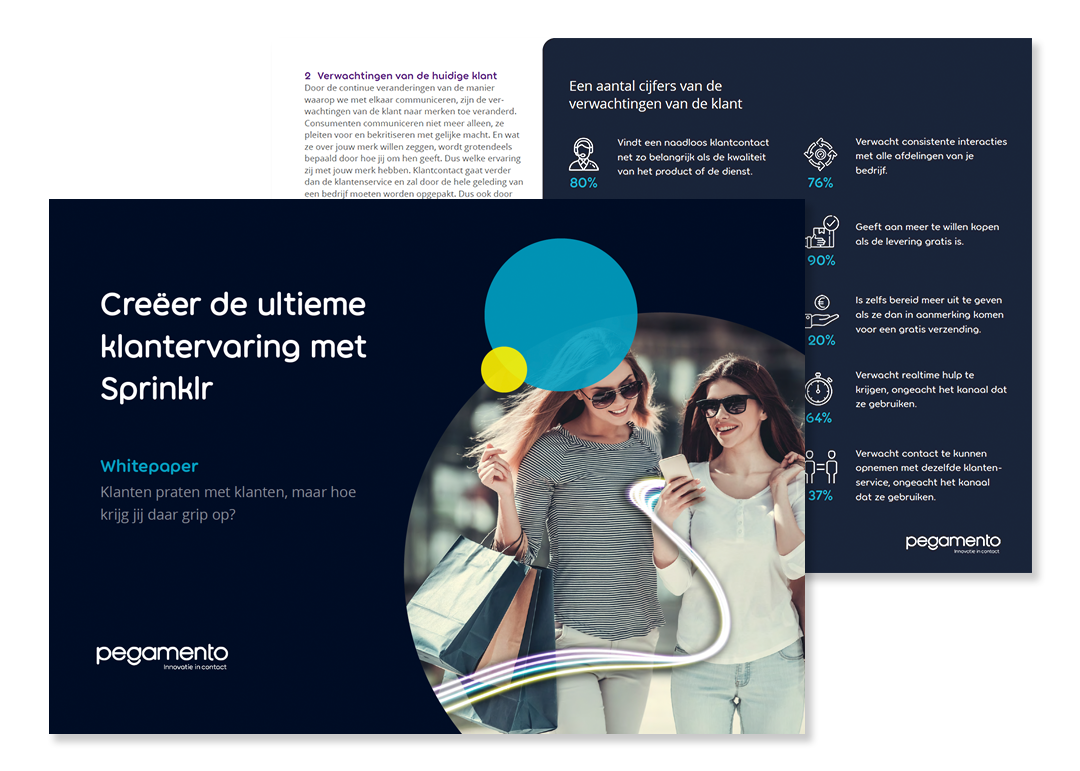
Create the ultimate customer experience with Sprinklr
Consumers are increasingly looking for convenience and good service. It’s not just about product and price anymore. How you deal with them as an organization makes or breaks your business. And they are only too happy to let each other know that. They talk to and about your brand through the channel of their choice. How do you get a grip on that? Read all about it in the white paper.
Download the free white paper and create the ultimate customer experience for your organization. Includes 7 ways to improve your customer experience strategy.