
How do you link VoIP to Microsoft Teams?

Connecting VoIP to Microsoft Teams integrates business telephony with your collaboration platform, allowing employees to call external numbers directly from Teams. This article explores the three main methods-Microsoft Calling Plans, Direct Routing, and Operator Connect-with their advantages and disadvantages. You’ll learn what licenses are required, how to implement, and the challenges you’ll face such as bandwidth requirements and user adoption. Find out which solution fits your organization size, existing infrastructure and IT capacity for integrated communications that supports hybrid working.
Why telephony becomes more important as AI improves

AI is rapidly changing customer contact. Chatbots answer simple questions, AI agents perform tasks, agent assist helps employees during conversations, and automated summaries save time after the fact. For many organizations, the conclusion seems logical: As AI improves, the importance of telephony diminishes. But in practice, the opposite often happens. Precisely when AI handles simple […]
ClickToDial for WorkplaceX: one-click calling, hassle-free
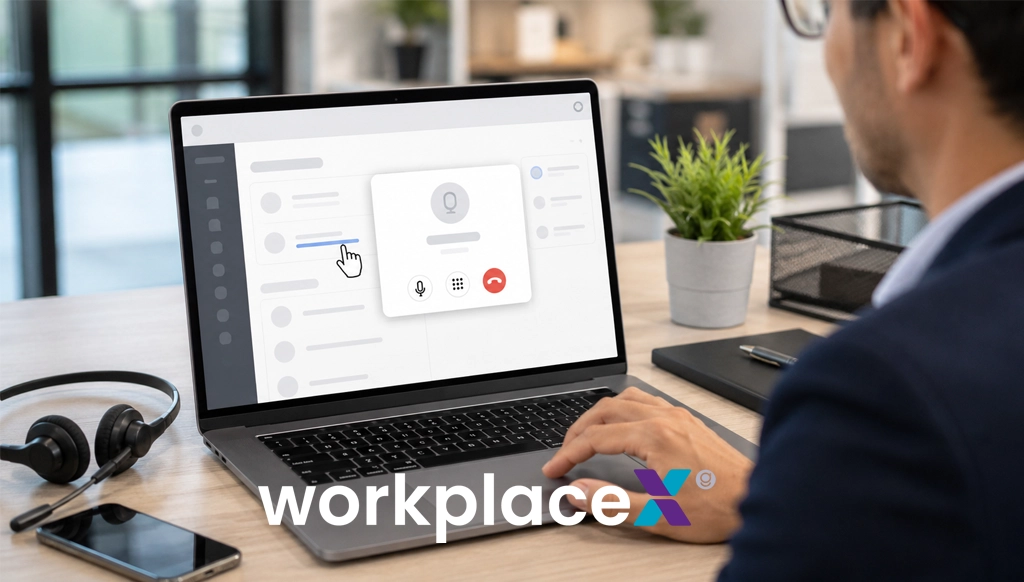
Customer contact is all about speed, convenience and accessibility. Employees do not want to search, copy, paste or switch between applications unnecessarily. Certainly not when they want to speak directly to a customer, colleague or relation. With the ClickToDial extension for WorkplaceX makes calling a lot easier: every clickable phone number turns into a direct […]
Pegamento and Ziggo conclude agreement for fixed network services

Pegamento signed contracts with Ziggo on March 27, 2026 for a wholesale partnership in fixed network services. This marks an important step in the further development of the company’s telecom proposition. For mobile services, Pegamento continues to partner with KPN. The partnership with Ziggo gives Pegamento a new operator status. This offers more control over […]
150 years of telephony: from “Mr. Watson” to smart customer communications
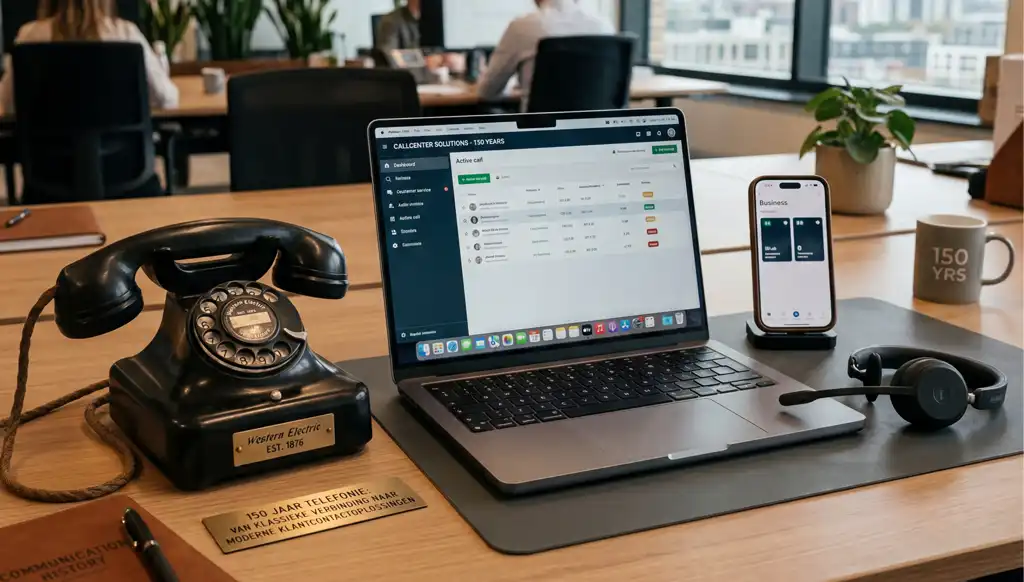
On March 10, 1876, communication changed forever. That day, the first telephone call took place in Boston, after Alexander Graham Bell made his famous call to his assistant Watson. What began as a technical breakthrough grew into a means of communication that has been moving with the way people live, work and do business for […]
What are the AVG requirements for VoIP telephony?

VoIP telephony processes personal data such as call metadata and recordings, so strict AVG requirements apply. Organizations must ensure data storage within the EU, justify retention periods, apply encryption and enter into processor agreements. This article covers what personal data VoIP systems collect, where call data should be stored, how long recordings can be kept, and what security measures are necessary. You’ll also learn how to be AVG-compliant in practice with disclosure requirements, DPIAs, and caller privacy rights.
How do you integrate VoIP with your contact center software?

VoIP integration with contact center software connects modern Internet telephony with customer contact platforms in one seamless system. This link eliminates switching between screens, improves first-call resolution through intelligent routing, and provides uniform reporting across all channels. Organizations with substantial contact volume realize significant efficiency gains as employees have all customer information readily available. Discover the technical operation, concrete benefits, implementation challenges and selection criteria for an integrated solution that suits your organization.
How do you link VoIP to CRM for better customer contact?

A VoIP-CRM link connects telephony directly to your customer database, allowing employees to see complete customer information during every call. This integration eliminates system changes and automatically records all interactions. Learn about the benefits of screen pops, click-to-dial and intelligent routing, the implementation challenges you face, and how to choose the right solution. From technical compatibility to change management, learn how to bring telephony and customer data together for faster processing and higher customer satisfaction.
How do you prepare your team for VoIP telephony?

The move to VoIP telephony succeeds or fails with team preparation. Employees work with cloud-based software, new workflows and expanded functionalities that are fundamentally different from traditional telephony. Effective hands-on training, role-based sessions and phased rollout through pilot groups minimize resistance and disruption. Proactively address reliability and complexity concerns through transparent communication and visible support. Early stakeholder engagement and sufficient preparation time determine the difference between frustration and successful adoption that improves your customer contact.
How does automatic call distribution work with VoIP?

Automatic call distribution (ACD) with VoIP intelligently routes incoming calls to the most appropriate employee based on skills, availability and customer data. This technology ensures shorter hold times, higher first-call resolution and more efficient use of your customer service team. Learn how skills-based routing, CRM integration and advanced routing methods are transforming your customer service. Discover the advantages VoIP-based ACD offers over traditional telephony systems and how to integrate it with existing business systems.